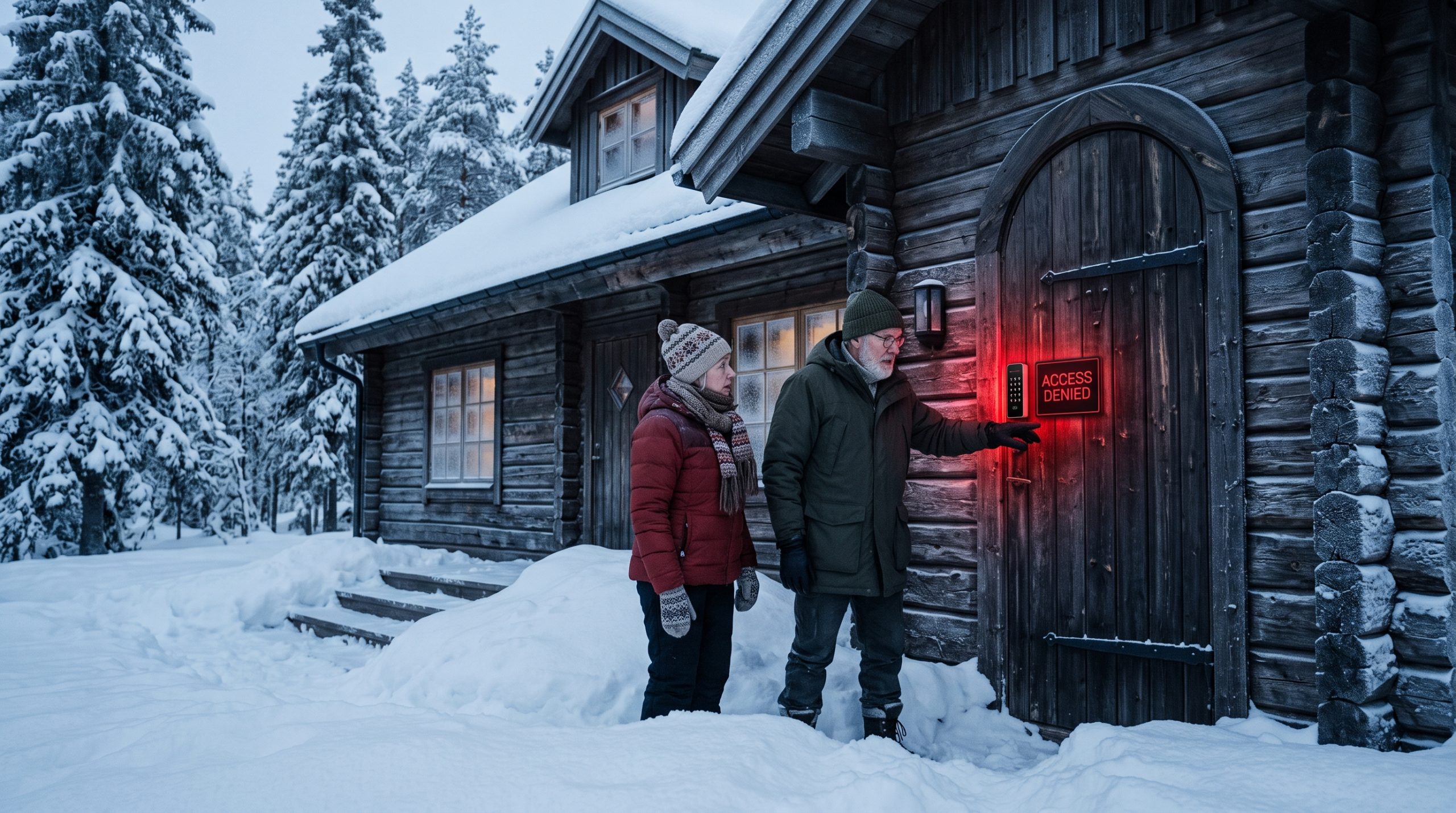
My Parents Told Everyone Our Cabin Was “Family Property.” The Deed Said Otherwise.
## PART 1
I learned that my cabin had become “family property” the same way I learned most uncomfortable things about my parents.
Someone else congratulated me first.
It happened on a Thursday afternoon in early October.
I had just finished reviewing contracts at my office in Spokane and was halfway through a cup of coffee that had already gone cold twice.
My phone buzzed.
A message from my cousin, Rachel.
Rachel: Wow. Sounds like Christmas is going to be huge this year!
I frowned.
Me: What do you mean?
She sent a screenshot.
Then another.
Then a third.
The screenshots came from Facebook.
My mother’s Facebook.
Public posts.
Hundreds of comments.
Smiling photos.
A picture of my cabin.
My cabin.
Nestled against the trees near Priest Lake.
Snow dusting the roof.
Smoke curling gently from the chimney.
The caption read:
**”So excited to host our entire family Christmas retreat at our family cabin this year! Everyone is welcome! Twenty-six guests and counting!”**
Beneath it, dozens of comments.
Can’t wait!
The kids are so excited!
Finally! A real family tradition!
Your cabin is beautiful!
See everyone in December!
I stared at the screen.
Then at the coffee in my hand.
Then back at the screen.
Our family cabin.
Interesting.
Because according to county records, mortgage documents, tax statements, insurance policies, and the deed sitting inside my filing cabinet—
It belonged to me.
Only me.
I bought the cabin five years earlier after selling my consulting business.
I renovated it myself.
Painted walls.
Replaced flooring.
Installed new plumbing.
Spent weekends repairing decks instead of taking vacations.
At the time, my parents called it unnecessary.
Dad said cabins were a waste of money.
Mom said maintaining two properties was irresponsible.
My younger brother, Jason, asked if he could use it for a fishing trip before I had even signed closing papers.
Nobody offered money.
Nobody offered labor.
Nobody offered help.
But apparently now—
Everybody offered ownership.
Rachel texted again.
Rachel: You knew, right?
Me: About what?
Rachel: Aunt Linda said you wanted to start a yearly family tradition.
I sat back in my chair.
A tradition.
Amazing how quickly assumptions transformed into plans.
I opened Facebook.
Mom had posted invitations.
Digital invitations.
Festive graphics.
Cabin photos.
A schedule.
Friday arrival.
Saturday family dinner.
Sunday sledding.
Gift exchange.
Movie night.
Breakfast buffet.
Twenty-six confirmed guests.
Not a single conversation with me.
Not one.
I called my mother.
She answered immediately.
“Honey!”
“Mom.”
“How are you?”
“Why is my cabin on Facebook?”
Silence.
Tiny.
Brief.
Practiced.
Then she laughed.
“Oh.”
“The Christmas retreat.”
“Yes.”
“My Christmas retreat.”
“Our Christmas retreat.”
“No.”
“What do you mean no?”
“I mean no.”
Mom sighed.
“You’ve always been possessive.”
“I’ve always paid the mortgage.”
“It’s a cabin.”
“It’s my cabin.”
“It’s family.”
“It’s property.”
Dad joined the call.
Of course he did.
Conference calls were my parents’ favorite strategy.
Numbers create pressure.
Pressure creates compliance.
At least, it used to.
Dad spoke confidently.
“We already invited everyone.”
“I noticed.”
“People requested vacation time.”
“I didn’t.”
“Flights are booked.”
“Then flights were booked irresponsibly.”
Dad laughed.
Not kindly.
Disbelievingly.
“You can’t seriously expect twenty-six people to cancel Christmas.”
“I expect twenty-six people not to invite themselves to property they don’t own.”
Mom lowered her voice.
People often become softer when manipulation becomes more effective than anger.
“Sweetheart.”
“What?”
“Your father and I helped create this family.”
“And I created the cabin.”
“It’s the same thing.”
“No.”
Because it wasn’t.
Not even close.
Family relationships and property rights were not interchangeable.
Love was not ownership.
Parenthood was not a deed.
And generosity was not permanent access.
“When exactly were you planning to tell me?” I asked.
Mom hesitated.
“We assumed you’d be happy.”
Dad added quickly.
“You hardly use it in winter anyway.”
Interesting.
Because I spent nearly every December there.
Alone.
Reading.
Resting.
Recovering.
After years of working sixty-hour weeks.
The cabin wasn’t just property.
It was peace.
And peace becomes valuable once you’ve spent enough years sacrificing it.
I rubbed my forehead.
“How many people did you invite?”
Mom sounded proud.
“Twenty-six.”
Dad corrected her.
“Twenty-eight if Jason brings Melissa’s parents.”
I nearly laughed.
Not because it was funny.
Because it was absurd.
Twenty-eight people.
At my cabin.
Without asking.
Without discussing.
Without permission.
Jason finally joined the conversation.
“Relax.”
“Relax?”
“It’s Christmas.”
“It’s my property.”
“Why are you making everything about ownership?”
I looked out my office window.
Rain streaked against the glass.
People walked below carrying umbrellas.
Normal lives.
Normal boundaries.
Normal expectations.
“I make ownership about ownership because ownership exists.”
Jason sighed dramatically.
“You’ve changed.”
There it was.
The sentence every boundary-setting adult eventually hears.
You’ve changed.
As though growth itself were betrayal.
As though refusing access automatically meant abandoning love.
“No,” I said.
“I’ve just stopped confusing kindness with obligation.”
Mom groaned.
“Now you sound like therapy.”
“No.”
“I sound like someone reading a deed.”
Silence.
For several seconds.
Then Mom said something that told me exactly how serious this had become.
“Well.”
“We already mailed invitations.”
I sat upright.
“Mailed?”
“Printed invitations.”
Dad laughed.
“They look beautiful.”
I closed my eyes.
Printed.
Addressed.
Sent.
Postage paid.
People informed.
Plans made.
Expectations created.
All without a single conversation.
“Mom.”
“What?”
“Did you actually print invitations?”
“Yes.”
“Using my cabin.”
“Yes.”
“As the location.”
“Yes.”
“Without asking.”
Mom sounded offended.
“We’re your parents.”
I stared at the wall.
At years of similar moments.
Borrowed cars.
Borrowed money.
Borrowed spaces.
Borrowed assumptions.
Always accompanied by the same explanation.
We’re family.
And for years—
That explanation had worked.
Until it didn’t.
I opened my laptop.
Logged into my security system.
Opened the property management app.
Then I said one word.
“No.”
Dad laughed.
Mom sighed.
Jason chuckled.
None of them believed me.
Not yet.
But they would.
Because while my parents had invitations—
I had something else.
Something significantly harder to ignore.
The deed.
And according to the county records—
Only one name appeared on it.
Mine.
**END OF PART 1**
# My Parents Told Everyone Our Cabin Was “Family Property.” The Deed Said Otherwise.
## PART 2
For years, my parents had operated under a simple philosophy.
If enough people expected something, saying no became rude.
Birthdays.
Vacations.
Holidays.
Money.
Favors.
Eventually, expectations became obligations.
At least that was how it worked in our family.
Until someone stopped participating.
Apparently, that someone was me.
I ended the call.
Then I sat quietly in my office for a few minutes.
My coffee had gone cold.
Again.
I didn’t drink it.
Instead, I opened my security system.
Current access list:
Me.
Property manager.
Mom.
Dad.
Jason.
I stared at the screen.
Three years earlier, I had added my parents.
Emergency purposes.
Pipe bursts.
Storm damage.
Maintenance concerns.
Responsible reasons.
Not holiday takeovers.
Not twenty-eight guests.
Not traditions created without permission.
I removed Mom.
Removed Dad.
Removed Jason.
Changed every access code.
Generated temporary credentials for the property manager.
Deleted old garage permissions.
Disabled remote entry.
Updated camera alerts.
Then I called my neighbor.
Mrs. Campbell answered immediately.
“Hello, dear.”
“Hi, Margaret.”
“Oh.”
She chuckled.
“Your family again?”
I laughed.
“How do you always know?”
“Because people don’t call neighbors unless they’re worried.”
Fair point.
“I need a favor.”
“Of course.”
“My parents invited twenty-eight people to the cabin.”
“Oh no.”
“Without permission.”
“Oh dear.”
“I changed the locks.”
“Good.”
“If anyone arrives unexpectedly this winter, they don’t have authorization.”
Mrs. Campbell paused.
Then said something I would remember later.
“People who don’t respect boundaries usually consider boundaries a personal attack.”
“That sounds accurate.”
“I’ve lived seventy-two years.”
She laughed softly.
“I’ve learned things.”
After hanging up, I made one more call.
My attorney.
He already knew my family.
Not personally.
Professionally.
Because my father once tried arguing that helping me paint a guest bedroom entitled him to partial ownership.
My attorney had laughed for almost thirty seconds.
“What happened this time?” he asked.
“My cabin became family property.”
“Legally?”
“Facebook-ly.”
He laughed.
“That’s a new category.”
“My mother mailed invitations.”
“To your cabin?”
“Yes.”
“Did you authorize anything?”
“No.”
“Contracts?”
“No.”
“Payments?”
“No.”
“Written agreements?”
“No.”
“Then congratulations.”
“On what?”
“You still own your cabin.”
Simple.
Clean.
Reality often sounds boring.
Until you’re surrounded by people inventing alternatives.
By evening, messages started arriving.
Rachel.
Rachel: Wait. You really didn’t know?
Me: No.
Aunt Karen.
Aunt Karen: Your mother said this was your idea.
Uncle Steve.
Uncle Steve: We already rented skis.
Interesting.
Because assumptions become expensive surprisingly fast.
I opened the family chat.
One hundred and twelve unread messages.
Mom had apparently been busy.
Mom: Families should stay together.
Mom: Christmas matters.
Mom: Sometimes people need grace.
Dad: This shouldn’t be public.
Jason: It’s literally one weekend.
I finally typed.
Me: To clarify.
Me: I never offered my cabin.
Me: I never approved a family retreat.
Me: I never invited twenty-eight people.
Me: I was informed after invitations had already been mailed.
Silence.
Then Rachel answered.
Rachel: Wait.
Aunt Karen: Seriously?
Uncle Steve: Linda said you planned this months ago.
Jason typed immediately.
Jason: You’re embarrassing Mom.
Me: Mom invited twenty-eight people to property she doesn’t own.
Mom replied.
Mom: We assumed you wouldn’t mind.
Assumed.
Such a harmless-looking word.
Capable of causing remarkably large problems.
Because assumptions only feel safe when someone else carries the consequences.
I set my phone aside.
For once—
I wasn’t interested in convincing anyone.
Truth rarely requires performance.
It simply requires consistency.
A week passed.
Then another.
People started calling.
Not to argue.
To verify.
Apparently stories had changed.
Some relatives heard I gifted the cabin.
Others heard Dad helped pay for it.
Some believed it was inherited property.
One cousin thought it belonged to a family trust.
Amazing what narratives emerge when people become comfortable borrowing reality.
Then Thanksgiving arrived.
And with it—
The first real confrontation.
Mom called.
“People are asking questions.”
“They should.”
“You made us look dishonest.”
I almost laughed.
“You invited twenty-eight people to my cabin.”
“We’re family.”
“We’ve covered that.”
Dad grabbed the phone.
“You’ve changed.”
“I have.”
“You used to care.”
“I still care.”
“Then prove it.”
Interesting.
Because proof in my family usually meant compliance.
Agreement.
Sacrifice.
Access.
Never accountability.
Never reciprocity.
Only giving.
I looked around my apartment.
Quiet.
Peaceful.
Mine.
For years, I had mistaken keeping peace for creating peace.
They’re different things.
Keeping peace means avoiding conflict.
Creating peace means protecting boundaries.
“I care enough to tell the truth,” I said.
Dad sighed.
“You’ll regret isolating yourself.”
“I’m not isolated.”
“What are you then?”
“Resting.”
He had no answer.
The call ended.
Two weeks later, Mrs. Campbell called.
“They came.”
I sat upright.
“Who?”
“Your parents.”
“When?”
“Today.”
“What happened?”
Mrs. Campbell laughed.
“They looked very confused.”
Apparently Mom and Dad had driven to the cabin.
Probably assuming I would eventually fold.
Eventually apologize.
Eventually surrender.
Except the keypad didn’t work.
The garage didn’t open.
The old keys no longer fit.
And cameras recorded everything.
“Your father shook the door handle for almost five minutes.”
I smiled.
“That sounds like him.”
“He called somebody.”
“My mother?”
“Probably.”
“What else?”
“Then they left.”
No damage.
No break-in attempt.
Just confusion.
Because people accustomed to access rarely imagine it disappearing.
Christmas eventually came.
At Aunt Karen’s house instead.
Smaller gathering.
Less certainty.
Less entitlement.
People asked before bringing guests.
People checked before making plans.
Imagine that.
Permission.
A revolutionary concept.
Mom was quiet most of the evening.
Dad watched television.
Jason spent more time with cousins than parents.
Dynamics had shifted.
Not dramatically.
Not magically.
But enough.
Enough to notice.
At one point, Mom found me alone in the kitchen.
She looked tired.
Older somehow.
Not weaker.
Just less certain.
“You really meant it,” she said.
“Yes.”
“I thought you’d eventually give in.”
“I know.”
“You always used to.”
That one landed.
Because she wasn’t wrong.
For years—
I eventually gave in.
Money.
Holidays.
Time.
Space.
Energy.
Until I realized something.
People eventually stop appreciating sacrifices they expect.
And expectations become difficult to satisfy because they continue growing.
Mom leaned against the counter.
“We just wanted everyone together.”
“Then you should have asked.”
“We’re your parents.”
“And I’m your daughter.”
She frowned.
“What does that mean?”
“It means love isn’t ownership.”
Silence.
Longer this time.
Then she nodded slightly.
Not agreement.
Not apology.
Understanding.
Maybe.
Maybe not.
Some people apologize directly.
Others simply stop crossing lines.
Sometimes that’s enough.
Spring arrived.
Snow melted.
The cabin remained exactly what it had always been.
Quiet.
Peaceful.
Safe.
Mine.
Jason visited once.
Asked three weeks ahead.
Brought groceries.
Cleaned up afterward.
Left a thank-you note.
Mom and Dad never visited.
Not because I banned them.
Because they finally understood something.
Access isn’t automatic.
Respect isn’t implied.
And being family doesn’t erase boundaries.
One Sunday morning, nearly a year after the Christmas retreat that never happened, I sat on the porch wrapped in a blanket.
Coffee in hand.
Lake shimmering in the distance.
Birds moving through pine trees.
My phone buzzed.
Dad.
A message.
Dad: Your mother was wondering if we could visit sometime.
Simple.
No assumptions.
No invitations.
No announcements.
Just a question.
Progress rarely arrives dramatically.
Sometimes—
It arrives as someone finally learning the difference between asking and informing.
I looked at the message.
Then at the cabin.
At the deck I built.
At the windows I replaced.
At the peace I spent years creating.
Then I smiled.
And replied.
Me: Of course.
Me: Thanks for asking first.
Three dots appeared.
Disappeared.
Then came the response.
Dad: Fair enough.
Short.
Awkward.
Late.
But honest.
For most of my life, silence felt uncomfortable.
Like disappointment.
Like rejection.
Like something missing.
But sitting there beside the lake—
Listening to wind move through trees—
Watching sunlight stretch across water—
Silence felt different.
It felt protected.
It felt earned.
And for the first time in years—
My cabin wasn’t a family expectation.
It wasn’t a tradition.
It wasn’t an obligation.
It was simply home.
And that was enough.
**THE END**